Thinking about getting a non-surgical face-lifting treatment during your trip to Korea?
HIFU lifting in Korea has become a popular option among international visitors who want to improve mild facial sagging, define the jawline or support firmer-looking skin without surgery. Treatment usually requires little visible recovery time, making it easier to include in a holiday or business itinerary.
However, searching for HIFU in Korea can quickly become confusing. Korean dermatology clinics may offer several devices—including Ultherapy, Shurink, Ultraformer and Liftera—at very different prices.
Although all four use focused ultrasound technology, they are not identical. Device technology, treatment depth, applicator design, energy delivery, shot count and the doctor’s treatment plan can all influence the experience.
The right choice depends on your:
- Degree of skin laxity
- Facial structure and fat distribution
- Treatment area
- Pain sensitivity
- Budget
- Expected result
- Time available in Korea
This guide compares four common HIFU treatments and explains what international patients should check before booking.
Quick answer: Ultherapy is often considered by patients seeking a premium ultrasound-lifting option with real-time imaging.
Shurink is widely chosen for accessible maintenance lifting, while Ultraformer offers multiple treatment depths and Liftera uses line- and pen-type applicators
for different facial areas. Suitability should always be confirmed through a qualified medical consultation.
What Is HIFU Lifting?
HIFU stands for High-Intensity Focused Ultrasound.
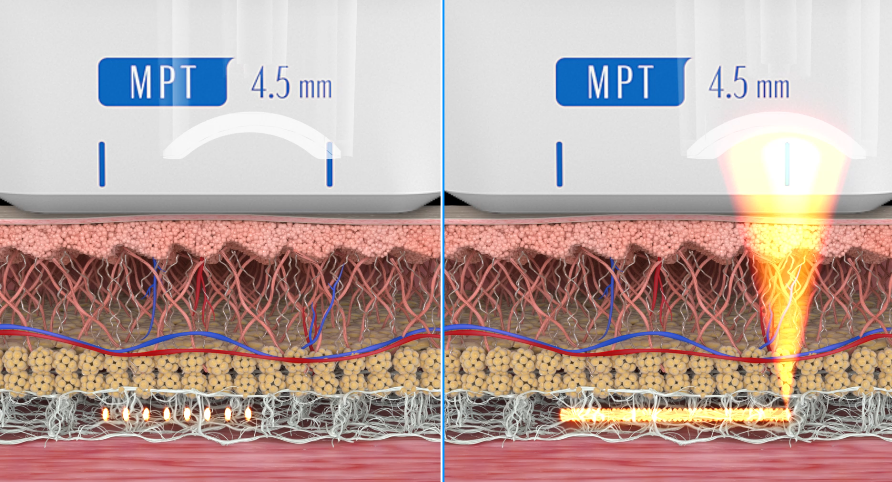
Unlike surgery, HIFU treatment does not require incisions. The device concentrates ultrasound energy at selected depths below the skin, creating controlled thermal coagulation points within targeted tissue.
This controlled response is intended to stimulate tissue remodelling and support collagen production over time. The treatment is commonly used for concerns such as:
- Mild facial sagging
- Reduced jawline definition
- Lower-face laxity
- Skin beneath the chin
- Neck laxity
- Certain facial or neck wrinkles
Shurink’s manufacturer, CLASSYS, describes the technology as delivering focused ultrasound energy at specific tissue depths to create thermal coagulation points and support gradual improvements in elasticity. Its facial cartridges include depths such as 1.5, 2.0, 3.0 and 4.5 millimetres.
HIFU is not equivalent to a surgical facelift. It may be considered for mild or moderate concerns, but it cannot remove large amounts of excess skin or reproduce the structural changes achieved through surgery.

Why Is HIFU Lifting Popular in Korea?
Korea offers a wide selection of ultrasound-lifting devices across different budgets and treatment approaches.
International visitors are often attracted to HIFU because it may offer:
- Non-surgical treatment
- No incisions or stitches
- Minimal visible downtime
- Treatment that may fit into a short trip
- Multiple device and price options
- Personalised treatment depths and areas
- Gradual, natural-looking changes rather than an immediate surgical transformation
The availability of several devices is an advantage, but it also makes clinic selection more complicated.
Some clinics promote treatments mainly by shot count or price. However, a well-designed HIFU procedure should consider the patient’s facial anatomy, skin thickness, fat distribution, asymmetry and degree of laxity—not simply deliver the highest number of shots.
Ultherapy vs Shurink vs Ultraformer vs Liftera
The following comparison provides a practical overview. Device availability and treatment protocols vary between clinics.
| Treatment | Often Considered For | Main Characteristic | Relative Price | Typical Visible Downtime |
|---|---|---|---|---|
| Ultherapy | Mild to moderate laxity, jawline, under-chin and neck concerns | Microfocused ultrasound with real-time imaging | Higher | Usually minimal |
| Shurink | Mild lifting, maintenance and budget-conscious visitors | Korean HIFU system with multiple cartridge depths | Lower | Usually minimal |
| Ultraformer | Facial lifting, contouring and treatment at multiple depths | Multiple facial and body cartridges depending on model | Mid-range | Usually minimal |
| Liftera | Mild lifting and treatment of curved or smaller facial areas | Line- and pen-type applicator options | Mid-range | Usually minimal |
This table should not be interpreted as a ranking.
A more expensive device is not automatically the right choice for every patient, and a lower-cost treatment is not necessarily appropriate simply because it is affordable.
1. Ultherapy
Ultherapy is one of the most internationally recognised non-surgical ultrasound-lifting treatments.
Its main technological distinction is real-time ultrasound visualisation. This allows the medical provider to view tissue layers while planning and delivering treatment. The current Ultherapy PRIME system appears in the US FDA’s device database as an Ulthera focused-ultrasound system, and the manufacturer identifies it as an FDA-cleared non-invasive lifting device with real-time imaging.
Ultherapy may be considered for:
- Mild to moderate skin laxity
- Reduced jawline definition
- Skin beneath the chin
- Neck laxity
- Brow-area lifting
- Patients seeking a premium ultrasound treatment
How many Ultherapy shots are needed?
This is one of the most common questions from international patients.
You may see packages advertising 100, 300, 500 or 600 shots. However, the appropriate number cannot be determined by age alone.
It depends on:
- Whether you are treating one area or the full face
- Facial size and structure
- Degree of laxity
- Areas that should be avoided
- Cartridge depths selected
- Whether the neck is included
- Previous lifting treatments
A limited number of shots may be used for a focused area, while a broader face-and-neck plan may require more. More shots do not automatically guarantee a better result. Treatment placement and design are equally important.
Is Ultherapy painful?
Discomfort varies considerably.
Patients may feel heat, tingling or brief pulses of discomfort as energy is delivered. Areas with less soft tissue—such as parts of the jawline or forehead—may feel more sensitive.
Clinics may use numbing cream, oral medication or other comfort measures depending on their protocol. Do not assume that every clinic provides the same pain-management options.
2. Shurink
Shurink is a Korean focused-ultrasound device widely available in dermatology and aesthetic clinics.
The Shurink Universe system uses several facial cartridge depths and includes both standard dot and MP energy-delivery modes. Its manufacturer states that different cartridges and modes allow treatment to be adjusted according to tissue depth and patient condition.
Shurink may be discussed for:
- Mild facial sagging
- Jawline maintenance
- Early signs of reduced elasticity
- Visitors seeking a more affordable HIFU option
- Patients who prefer a shorter, simpler lifting appointment
Because it is often priced below Ultherapy, Shurink can be appealing to younger patients or people trying HIFU for the first time.
However, a low promotional price may cover only a small number of shots or limited areas. Before booking, confirm:
- Exact device model
- Shot count
- Areas included
- Cartridge depths
- Whether a doctor performs or supervises the procedure
- Whether numbing and aftercare are included
Shurink may be useful for maintenance, but it should not be oversold as a replacement for surgery or as the ideal treatment for every degree of sagging.
3. Ultraformer
Ultraformer is another ultrasound platform produced by Korean medical-device company CLASSYS.
Different Ultraformer models may provide several cartridge depths for the face and body. The Ultraformer MPT’s official product information lists target depths ranging from 1.5 to 13 millimetres, with the treatment area and shot count selected according to individual concerns such as facial asymmetry and the severity of sagging.
For facial treatment, Ultraformer may be considered for:
- Mild facial laxity
- Lower-face contour concerns
- Jawline definition
- Areas requiring different treatment depths
- Patients comparing mid-range HIFU options
The name “Ultraformer” alone does not describe the complete treatment.
Ask which model is being used, which cartridges are planned and whether the quoted package is for a focused area or the full face.
As with other HIFU devices, the doctor’s understanding of facial structure and treatment depth matters more than marketing language alone.
4. Liftera
Liftera is a Korean HIFU platform known for offering line- and pen-type applicators.
The manufacturer explains that Liftera2 includes both applicator types, with selection based on the patient’s skin condition. The pen applicator may allow the provider to follow smaller or curved facial areas more closely, while the line applicator can be used across broader treatment zones.
Liftera may be considered for:
- Mild facial lifting
- Jawline and lower-face treatment
- Smaller or curved areas
- Patients seeking an alternative Korean HIFU device
- Maintenance-focused treatment plans
However, the presence of a pen applicator does not mean the treatment is automatically more precise or suitable for everyone. Results still depend on the practitioner’s planning, selected depths, energy settings and understanding of the patient’s anatomy.

Which HIFU Treatment Is Right for You?
The best HIFU treatment is the one that matches your facial condition—not simply the device that is most expensive or popular online.
You may discuss Ultherapy when:
You want a premium option with real-time ultrasound imaging, have mild to moderate laxity or are treating areas such as the lower face, under the chin or neck.
You may discuss Shurink when:
You have mild concerns, want maintenance lifting or prefer a more accessible price point.
You may discuss Ultraformer when:
You want to compare a device with multiple treatment-depth options for facial lifting and contouring.
You may discuss Liftera when:
You are interested in a treatment using line- and pen-type applicators, including selected smaller or curved facial areas.
These are general comparisons, not medical recommendations.
Some people with a thin face or limited facial fat may need particularly careful planning. Aggressive treatment in unsuitable areas could create an appearance they did not want. Conversely, patients with substantial excess skin may be disappointed if HIFU is presented as an alternative to surgery.
HIFU Lifting in Korea Cost
HIFU prices in Korea vary significantly according to the device, generation, clinic, treatment area and shot count.
The following are reference prices from selected MediCaddy Korea partner clinics, not standard national prices:
| Treatment | Partner Clinic Reference Price |
|---|---|
| Shurink 100 shots | Around ₩140,000 |
| Ultherapy PRIME 500 shots | Around ₩2,400,000 |
| Ultherapy PRIME 600 shots | From around ₩2,900,000 |
Ultraformer and Liftera prices vary by clinic and package and should be confirmed before booking.
Pain, Downtime and Results
Does HIFU hurt?
HIFU is non-surgical, but that does not mean it is completely painless.
The sensation varies according to the device, depth, energy level, facial area and individual pain tolerance. Some patients describe warmth or pressure, while others experience sharper discomfort at certain points.
Is there downtime?
Most patients can return to ordinary activities shortly after treatment.
Temporary effects may include:
- Mild redness
- Swelling
- Tenderness
- Tightness
- Tingling
- Temporary sensitivity when touching the treated area
Ultherapy’s official safety information lists redness, swelling and pain among the commonly reported effects, with transient nerve-related effects also reported in clinical trials.
Your clinic should explain what is expected and provide contact instructions in case symptoms are unusual or persistent.
When can results be seen?
Some people notice early tightness, but HIFU is generally selected for gradual improvement rather than an immediate surgical-style lift.
Changes may develop as tissue remodelling occurs over the following weeks and months. The timing and degree of improvement vary by patient, device and protocol.
What Should You Check Before Booking HIFU in Korea?
Do not choose a clinic based only on the lowest price or highest shot count.
Before confirming your appointment, ask:
- Which exact device and model will be used?
- Who will assess my face and perform the treatment?
- Which areas are included in the quoted price?
- How many shots are recommended—and why?
- Which cartridge depths will be used?
- What pain-management options are available?
- What side effects and downtime should I expect?
- Who can I contact after treatment if I have concerns?
A trustworthy provider should be willing to explain why a particular device and treatment plan suit your face.
You should also disclose:
- Previous HIFU or RF treatments
- Facial fillers or threads
- Dental or facial implants
- Current skin infections
- Pregnancy or breastfeeding
- Neurological conditions
- Regular medications
- Recent facial surgery
Suitability and precautions should be confirmed by a qualified doctor.
Who Is MediCaddy Korea Recommended For?
Recommended For: Visitors confused by too many HIFU options
MediCaddy Korea can help you compare Ultherapy, Shurink, Ultraformer and Liftera based on your concern, budget, preferred downtime and location.
Recommended For: Visitors who want individual treatment planning
We prioritise clinics that assess the patient’s face and explain the treatment plan rather than automatically selling the largest package.
Recommended For: International visitors concerned about communication
Our team can support appointment booking, clinic communication and interpretation so your concerns, previous procedures and expectations are understood clearly.
Recommended For: Travellers with limited time in Korea
We can coordinate consultations and treatments around your sightseeing, business or flight schedule while allowing appropriate time for recovery.
Frequently Asked Questions
What is the best HIFU lifting treatment in Korea?
There is no single best HIFU treatment for every patient. Ultherapy, Shurink, Ultraformer and Liftera differ in imaging, applicators, treatment options and price. The right choice depends on your facial structure, skin laxity, treatment area, budget and medical consultation.
How much does HIFU lifting cost in Korea?
Prices range widely. At selected MediCaddy Korea partner clinics, Shurink may start from around ₩140,000 for 100 shots, while Ultherapy PRIME 500 shots may cost around ₩2,420,000. Prices vary by clinic, device, area and shot count.
Is Ultherapy better than Shurink?
Ultherapy is not automatically better for every patient. It offers real-time ultrasound imaging and usually costs more. Shurink is a more affordable Korean HIFU option often considered for mild concerns or maintenance. A doctor should determine which approach better matches your needs.
How many HIFU shots do I need for my face?
The number depends on facial size, treatment areas, degree of laxity, device and cartridge plan. A focused area may require fewer shots than a full face-and-neck treatment. More shots do not automatically produce better results.
Is HIFU good for a double chin or jawline?
HIFU may help improve the appearance of mild lower-face laxity and jawline definition in suitable patients. However, a double chin may also involve fat volume, anatomy or skin excess, so HIFU may not be the only or most appropriate option.
Is Ultherapy painful in Korea?
Ultherapy may cause heat, tingling or brief discomfort, particularly over sensitive or bony areas. Pain levels differ significantly between patients. Ask the clinic about numbing, medication and other comfort options before booking.
Can I get HIFU during my trip to Korea?
Yes, many international visitors schedule HIFU during their trip because visible downtime is often limited. However, it is better not to book an important photo event immediately afterward, as temporary swelling, tenderness or redness can occur.
How often should I get HIFU?
Treatment intervals vary according to the device, age, skin condition, response and long-term plan. Do not repeat HIFU simply because a promotional package is available. A doctor should assess whether another session is appropriate.
Find the Right HIFU Treatment in Korea with MediCaddy Korea
HIFU can be a convenient non-surgical lifting option, but choosing the device is only one part of the decision.
The quality of the consultation, treatment design, provider experience and aftercare can be just as important as the brand name printed on the machine.
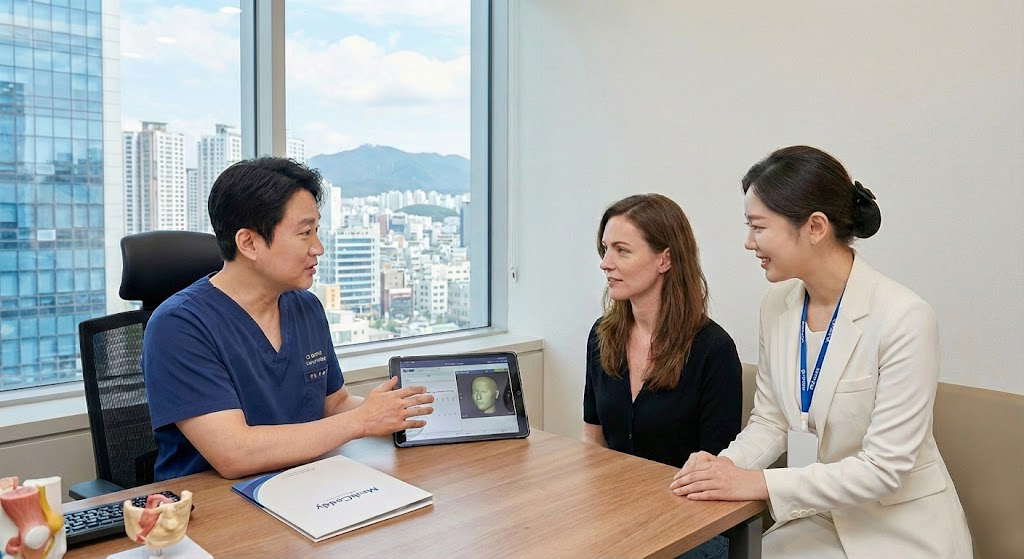
MediCaddy Korea helps international visitors compare suitable HIFU treatments, understand reference prices, arrange appointments and communicate clearly with clinics.
Contact MediCaddy Korea for a personalised consultation based on your facial concerns, preferred treatment location, budget and travel schedule.